
The Impact of Updated NCC Standards on Your Upcoming Projects
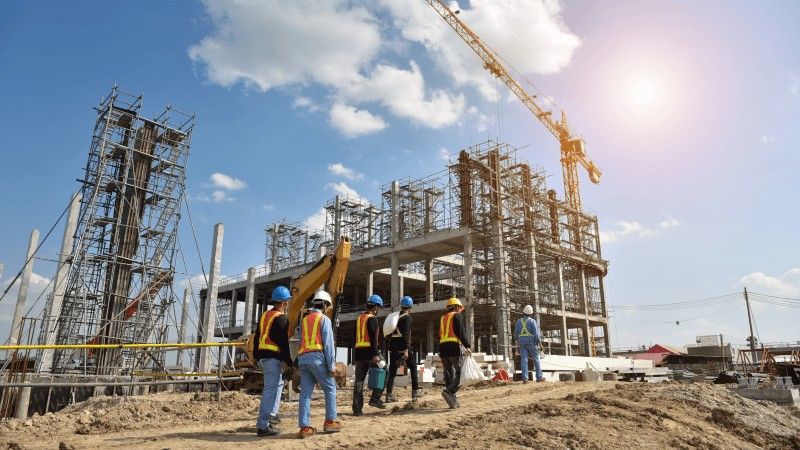
If you have projects in the pipeline, whether they’re residential developments, commercial fitouts, or mixed-use builds, the NCC 2022 energy standards are already shaping what’s possible, what’s required, and what’s going to cost you if you’re not prepared. The updated NCC compliance framework isn’t theoretical anymore. It’s actively affecting design decisions, material specifications, approval timelines, and project budgets right now, across Victoria, NSW, and Queensland. This article cuts through the noise and focuses on the practical, project-level impacts you need to understand before your next job gets underway.
Impact 1: Your Standard Specifications May No Longer Be Enough
One of the biggest disruptions the NCC 2022 updates have caused is the invalidation of “standard” construction specifications that worked reliably under the old rules. Many builders and developers have discovered that their go-to material specifications, insulation R-values, window glazing types, construction systems, no longer achieve a compliant energy rating without modification.
This affects projects in several ways:
- Glazing upgrades: single-glazed aluminium-framed windows that were once “standard” may now require double glazing or thermally broken frames to pass a 7-star NatHERS assessment in many climate zones
- Insulation uplift: roof and wall insulation levels that previously passed may now need to be increased, particularly in climate zones with significant heating loads
- Orientation constraints: designs that rely heavily on large west-facing glazing or compact floor plans with poor solar access may require redesign or significant envelope upgrades to compensate
The practical solution: run your NatHERS assessment early, ideally at concept or design development stage, so that specification changes can be made before they become expensive disruptions.
Impact 2: Whole of Home Adds a New Layer of Approval Complexity
The Whole of Home Assessment is new territory for most project teams. Unlike NatHERS, which focuses solely on the building envelope, Whole of Home requires you to demonstrate that the home’s total projected energy consumption, including all fixed appliances, falls within the NCC’s prescribed annual energy budget.
What this means for your upcoming projects:
- Appliance selections now have compliance implications. A project that specifies gas ducted heating and a gas hot water system may struggle to meet the energy budget without a strong NatHERS rating and rooftop solar to offset consumption.
- Solar PV systems can help, but can’t do all the work. Whole of Home allows solar generation to offset energy use, but the system still needs to be correctly specified and documented to count toward compliance.
- The assessment needs to be completed before permit issue. This is often overlooked, the Whole of Home documentation must be included as part of the building permit application, not added later.
Early coordination between your energy assessor, architect, and hydraulic/mechanical consultants is essential to avoid last-minute compliance scrambles.
Impact 3: Commercial Projects Face Tightened Section J Requirements
For commercial building projects, the NCC 2022 updates also tightened the Section J energy efficiency provisions, which govern Class 2–9 buildings. Key changes include:
- Increased minimum insulation requirements for roofs, walls, and floors in commercial buildings
- Tighter maximum U-values for commercial glazing systems
- Updated lighting power density limits: a greater emphasis on efficient LED systems and controls
- HVAC efficiency minimum standards: minimum energy performance requirements for commercial heating, cooling, and ventilation systems have been updated
For developers and building owners, this means that commercial projects designed under pre-2022 standards may need to be re-assessed if permits haven’t yet been issued.
Commercial projects also have access to the JV3 performance pathway, which allows an alternative compliance method via detailed energy modelling, a valuable option for complex or non-standard buildings where prescriptive compliance would be costly or constraining.
Impact 4: Project Timelines Are Being Affected
The compliance changes are affecting how long it takes to move projects through design and approval. Here’s where teams are losing time:
- Redesign loops: designs that don’t pass their initial energy assessments require revisions, which cost time at every stage
- Assessor availability: increased demand for energy assessments since the NCC 2022 changes means that leaving assessments to the last minute can cause delays
- Certifier queries: if compliance documentation is incomplete or unclear, certifiers will send it back for clarification, stalling the permit process
- Specification coordination gaps: when the energy assessor, architect, and builder aren’t aligned on specifications, discrepancies can be flagged at inspection stage
The single most effective way to protect your project timeline? Engage your energy consultant earlier and communicate more frequently. A 30-minute design-stage conversation with your assessor can save days, or weeks, of remediation later.
Impact 5: Client Expectations Are Rising
There’s a broader market shift happening alongside the regulatory changes. Homebuyers, tenants, and commercial building occupants are increasingly energy-aware, and their expectations of new buildings are rising accordingly.
Clients are now asking:
- “What will my energy bills be in this home?”
- “Does this building have a NatHERS rating, and what is it?”
- “Is there solar included? Will it be battery-ready?”
- “How does this building compare to others at this price point?”
Architects and builders who can confidently answer these questions, and back up the answers with quality compliance documentation, are winning more work and generating more referrals. Those who can’t are increasingly being left behind.
Read more: Passive Solar Design Consulting
Future-Proof Your Projects with PassivEnergy
Don’t let NCC 2022 updates catch your next project off-guard. PassivEnergy delivers fast, accurate, and fully compliant energy assessments for residential and commercial projects across Victoria, NSW, and Queensland.
✅ NatHERS Ratings and Whole of Home Assessments
✅ Section J and DTS commercial compliance
✅ Design-stage modelling to protect your timeline and budget
✅ 24-hour express service for urgent projects
👉 Contact PassivEnergy now, and get ahead of the code.
Frequently Asked Questions
It depends on when the building permit was issued, not when the design was completed. If a building permit was lodged and approved under the pre-2022 standards, the older requirements typically apply. However, if a permit hasn’t been issued yet, even for a design that was completed before 2022, the current NCC 2022 energy requirements will generally apply. Confirm the specific cutover rules with your building surveyor.
Yes. For projects where the prescriptive requirements are difficult or costly to meet due to site constraints (orientation, heritage overlays, overshadowing, etc.), the JV3 performance pathway (for commercial) or a performance solution may provide a more flexible compliance route. An experienced energy consultant can assess whether an alternative pathway is appropriate for your project.
Multi-residential developments face both the 7-star NatHERS requirement for each individual dwelling and the Whole of Home assessment for each unit. For apartment buildings (Class 2), there are also common-area energy requirements under Section J. VURB (Variation to Universal Requirements for Buildings) assessments and Specification 44 may also apply in some jurisdictions. PassivEnergy has specific expertise in navigating these requirements for multi-residential projects.
The impacts of the NCC 2022 energy standards on your upcoming projects are real, measurable, and already playing out across the industry. The difference between projects that navigate these changes smoothly and those that don’t isn’t luck, it’s preparation, the right expertise at the right time, and a consultant who understands both the code and the practical realities of construction. PassivEnergy is the compliance partner that brings all of that to the table, helping you deliver better projects with fewer surprises, from permit to handover.
Written by Rob Iacono
Here's what to do next!
Free Guide
Request a Quote
Free Consultation

Rob Iacono
Rob is passionate about building strong relationships with his clients, offering practical, no-nonsense advice, and delivering cost-effective solutions that produce positive results. His commitment to sustainability and client satisfaction is the cornerstone of everything he does.
Accreditations:
- NatHERS Assessment (FirstRate 5, HERO)
- BASIX Assessments
- Whole of Homes Assessments - BESS (Advanced) trained